EV Charging Design Service

EV infrastructure designed for compliance with Part S Building Regulations whilst optimising for cost and long-term operation.

An electrical plug is inserted into an outlet on a wooden wall indoors, with part of a window and a view of trees visible in the background.
Keepmoat logo with a colorful arrow symbol and blue text.
Hacking + Paterson Management Services logo with text
Stoneharbour logo featuring a stylized house with a roof and chimney, teal background, white text.
Logo of Barratt Redrow featuring a tree icon.
Dorchester Living logo featuring a circular abstract design and text.

How we help

1) Design - compliance achieved often at 50% of the cost

2) Supply - we typically achieve very good value on hardware

3) Install - outsource to Cosmic or deliver with your incumbent team

4) Adopt - we operate the system from day one

We recently worked with Cosmic Charging on a Part S compliant EV charging strategy, and the experience was excellent from start to finish. Their knowledge of the regulations and practical requirements was clear at every stage of the project.

We would highly recommend them for EV infrastructure planning and Part S compliance support.

 Ramon Seera, Head of Technical at Dorchester Group

Why EV charging is complex for shared parking?

Installing EV chargers is straightforward when parking sits next to a house.

In shared parking areas, such as apartment car parks, underground parking or courtyards, systems become more complex. Power must be shared, load managed, billing implemented and the system maintained long-term.

Cosmic designs these systems to work from the start.

A man wearing a yellow safety helmet, glasses, and gloves working on electrical wiring in an indoor setting.

What does this mean for shared parking areas, underground car parks and courtyards?

Shared parking areas introduce additional complexity because electrical capacity must be shared, equitable billing systems must be in place, and the system must be maintained and remain safe over time.

At design stage, developers need to consider these factors to avoid costly changes later:

Four pink arrow icons pointing outward from the center in each of the four directions.
Pink gear icon with a lightning bolt and power symbol inside.

Electrical capacity

How to provide enough power for a working system without triggering unnecessary grid upgrade costs.

Pink line drawing of three sliders for an audio mixer on a white background.

Value engineering

How to reduce installation costs through the right design and equipment choices.

Outline of two hands shaking with a document featuring a checkmark above them.

Part S compliance

How to ensure the installation meets Approved Document S requirements from day one.

Ongoing management

Who will manage, maintain and support the system after handover.

Adoption, Management
and Maintenance

  • Resident onboarding

  • Billing and payment collection

  • Load management software

  • Maintenance and repairs

  • Resident support

  • Ongoing system management

  • System monitoring and safety checks

Developers can complete and hand over the site knowing the EV charging infrastructure is compliant, operational and managed for the long term, without adding to the service charge or responsibility to the managing agent.

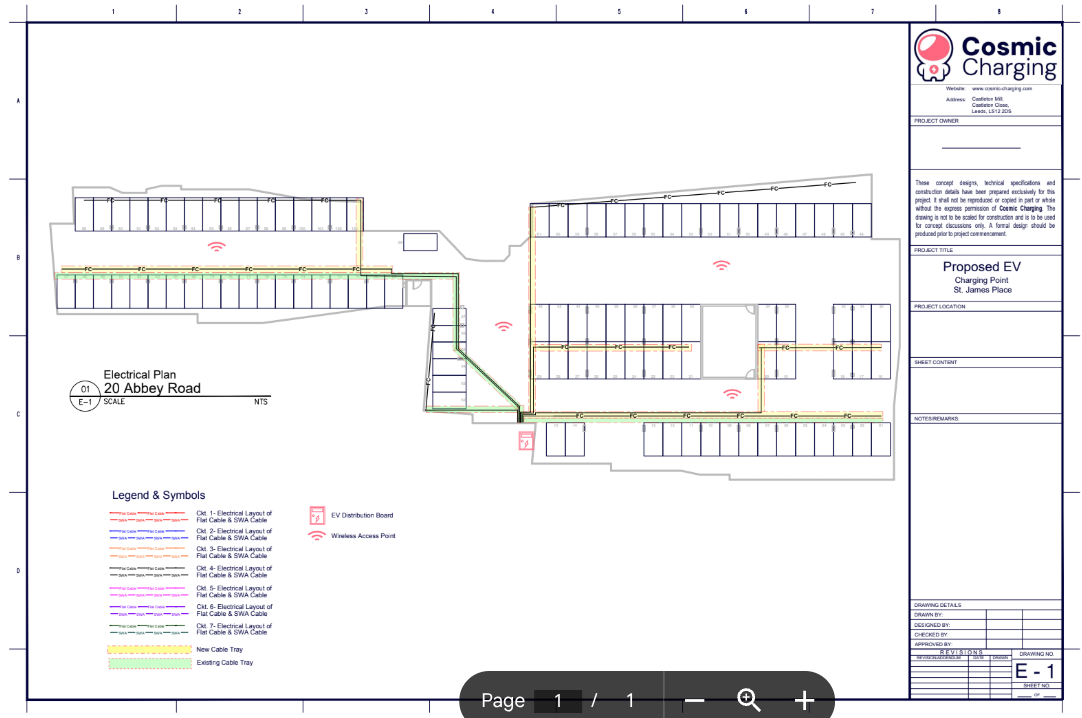
Examples of the drawings, layouts and specifications we typically produce:
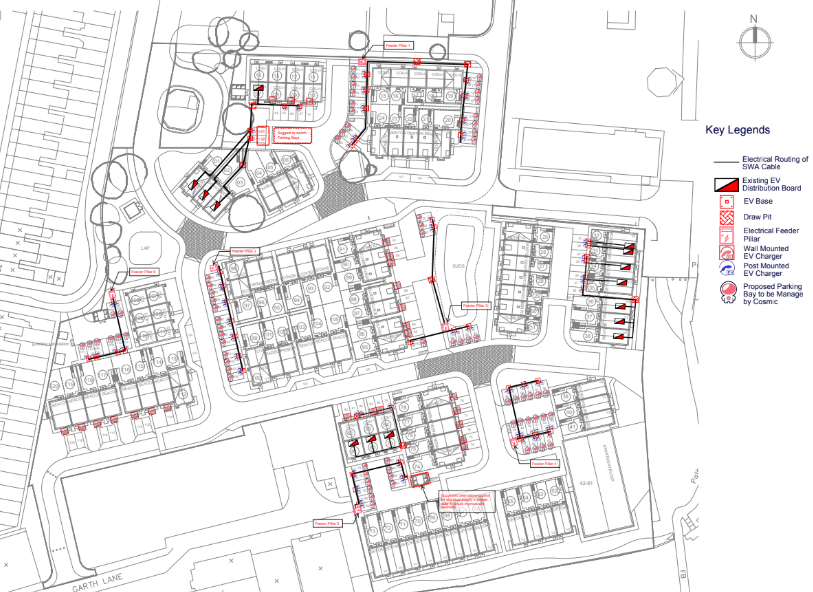
A detailed site plan for a residential community showing electrical and EV charging infrastructure, including parking bays, electrical feeders, EV chargers, and key legend symbols for various electrical components.
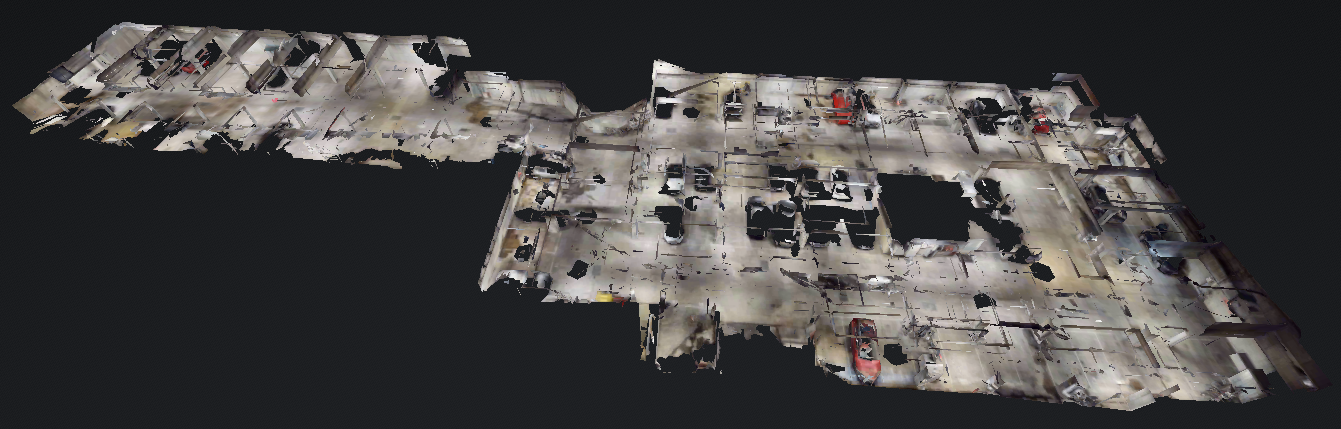
3D model of a multi-level parking garage with several cars parked inside.
Electrical plan for proposed electric vehicle charging point at St. James Place, showing wiring, cable layout, and EV distribution board layout at 20 Abbey Road.

Have a development that needs to comply with Part S?