The emerging danger we must avoid
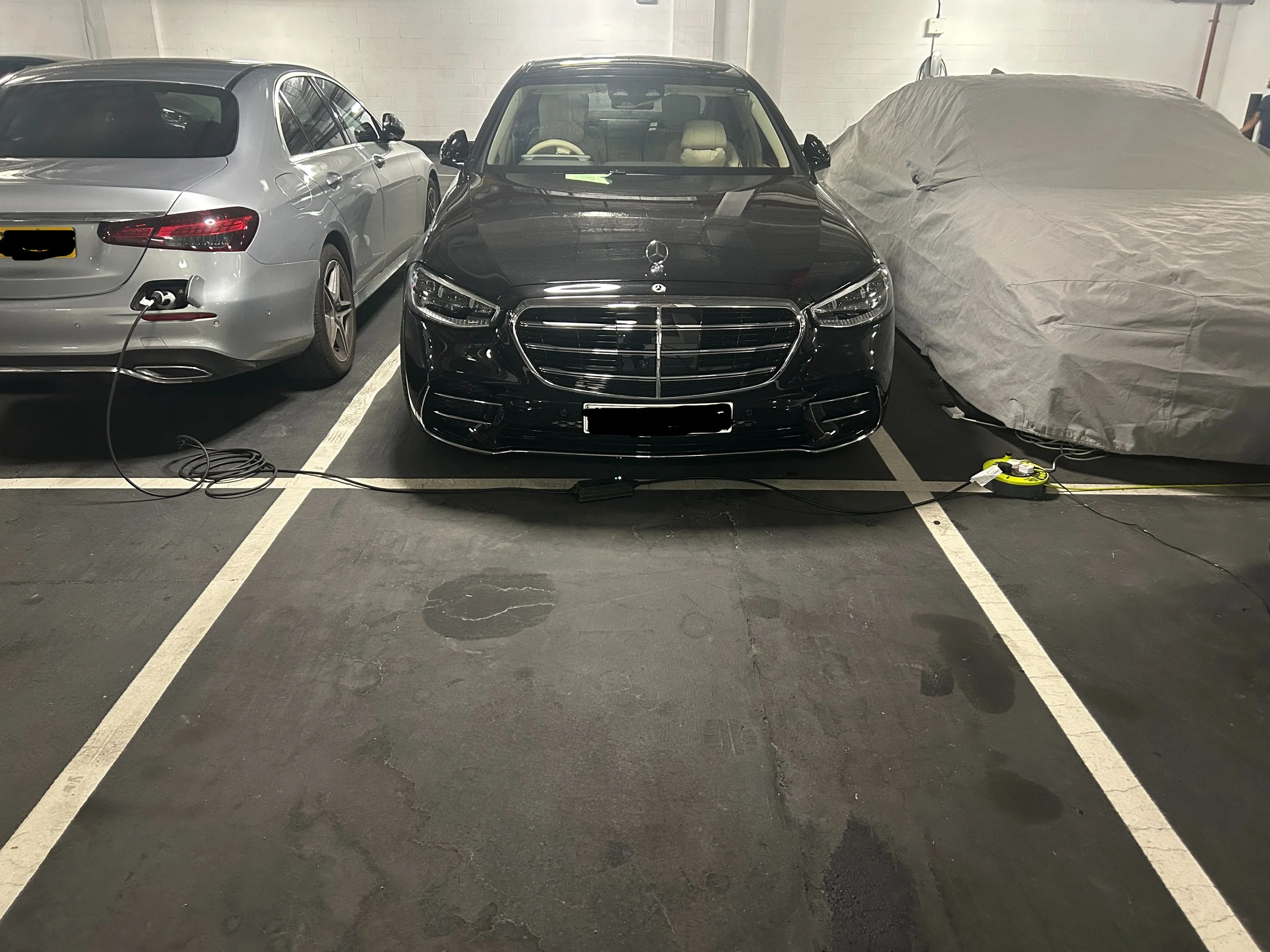
Across the UK, a quiet and dangerous workaround is becoming increasingly common. EV drivers who live in apartment buildings, unable to access a dedicated chargepoint, are running extension leads from a communal socket or their own flat. It is easy to understand why. They bought an electric car, they need to charge it, and nobody has given them a better option. But the method they are turning to is one that fire engineers, electricians, and insurers have been warning about for years.
What makes three-pin charging so hazardous?
A standard domestic three-pin plug and socket is designed for intermittent household loads: a kettle, a lamp, a phone charger. EV charging is a fundamentally different kind of demand. A typical 3 pin home charger draws around 2.3kW continuously, often for eight to twelve hours overnight. That sustained load, sustained heat, and sustained current is exactly the kind of stress that domestic wiring and consumer-grade sockets were never engineered to tolerate night after night.
The risks compound quickly in a multi-occupancy setting. Extension leads used for EV charging are frequently undersized for the load, left coiled (which dramatically increases heat build-up), run under doors or carpets, and left unattended for hours. A loose socket connection, a worn lead, or a slightly corroded pin can create localised resistance that generates enough heat to ignite surrounding materials. In a car park beneath an apartment block, that fire has access to vehicles, structural elements, and the building above.
A policy vacuum is making things worse
The uncomfortable truth is that this behaviour is not simply a matter of drivers taking shortcuts. It is the predictable consequence of a policy environment that has removed financial support for proper infrastructure without replacing it with anything adequate.
In April 2026, the EV Infrastructure Grant for residential landlords was quietly ended. That grant was imperfect and the application process was far from straightforward, but it provided a tangible mechanism for freeholders and property managers to secure funding for the installation of proper, dedicated EV chargepoints in apartment buildings. Without it, the economics of MDU charging projects have become significantly harder to stack up, particularly for those with complex electrical infrastructure or external parking.
At the same time, fire safety guidance for EV charging in residential buildings remains stubbornly unclear. Insurers are asking questions that guidance documents do not answer. Freeholders are being told by their managing agents to wait until the picture is clearer. Fire risk assessors are noting the absence of authoritative national guidance and recommending caution. The result is that legitimate, properly designed charging projects are stalling at exactly the moment when EV adoption is accelerating and the need for solutions is greatest.
When infrastructure does not get built, drivers do not stop needing to charge. They find another way.
The gap between need and provision is growing
UK EV registrations continue to rise. The ZEV Mandate is pushing manufacturers to increase electric vehicle sales year on year. A growing proportion of those vehicles are being purchased by people who live in flats and cannot access off-street parking with a dedicated supply. The government's own targets implicitly assume that charging infrastructure will keep pace. It is not keeping pace in the MDU sector which represents 17% of the total population, and the removal of grant funding alongside persistent regulatory uncertainty has made the gap wider, not narrower.
The people most exposed to the risks of three-pin charging are not reckless. They are often careful, environmentally motivated individuals who simply have no other realistic option available to them. They deserve better than an extension lead and a hope that nothing goes wrong overnight.
What needs to happen
Proper EV charging in apartment buildings requires dedicated circuits, appropriate protection, and equipment that is fit for purpose and safely located. The infrastructure exists to do this well and indeed acts as a safety mitigation vs alternatives. What is missing is the policy framework, the financial support, and the regulatory clarity to unlock it at scale.
Clear, authoritative fire safety guidance for EV charging in multi-occupancy residential buildings would immediately help unblock projects that are currently stalled. Reinstating or replacing the residential grant mechanism would restore the commercial viability of installations that are currently impossible to finance as has been announced in Scotland. And a coherent national standard for MDU charging, developed with input from fire services, insurers, and the industry, would give freeholders and their advisors the confidence to act.
Until that happens, the extension leads will keep appearing. And the risk will keep growing.